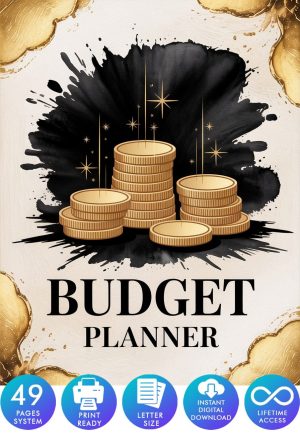

Budget Planner for Financial Goals: Complete 2026 Guide
Finding the right budget planner for financial goals transforms your financial future. Whether you’re saving for a house, paying off debt, or building emergency savings, a comprehensive planning system provides the structure you need to succeed.
Studies show that people who use structured budget systems are 42% more likely to achieve their objectives. Let’s explore how the right tool makes all the difference.
Why You Need a Planning System
According to Charles Schwab’s Modern Wealth Survey, only 33% of Americans maintain a written financial plan. Yet those who do are significantly more confident about reaching their objectives.
A dedicated system solves three problems: tracking multiple targets simultaneously, maintaining accountability through documentation, and visualizing progress to stay motivated. Research from Dominican University proves that written goals have 42% higher success rates.
Essential Features for Success
After analyzing Consumer Financial Protection Bureau recommendations, here are must-have features:
Dedicated Tracking Pages
The Ultimate Budget Planner provides specialized sheets for emergency funds, house savings, car funds, travel savings, wedding planning, and debt payoff—all organized in one place.
Monthly Review Systems
Investopedia financial experts recommend reviewing targets monthly and annually. Quality systems include structured reflection pages to assess progress and adjust strategies.
Fun Savings Challenges
Gamification increases achievement by 90%, according to Harvard Business Review. This comprehensive system includes the 52-Week Challenge, 100 Envelopes Challenge, and No-Spend Month Challenge.
How to Use Your Planner Effectively
Financial advisors at Kiplinger suggest this framework:
Set SMART Targets: Transform “save more” into “save $5,000 by December 2026, contributing $420 monthly.”
Break Into Monthly Milestones: A $10,000 goal becomes manageable as $834 monthly chunks.
Track Weekly: Sunday check-ins keep you accountable. American Psychological Association research shows weekly reviews dramatically increase follow-through.
Common Goals to Track
According to Bankrate’s Financial Security Survey, top priorities include:
- Emergency Fund – 3-6 months expenses
- Debt Elimination – Using snowball or avalanche methods
- Major Purchases – House, car, wedding savings
Transform Your Future Today
The difference between financial struggle and freedom comes down to having a proper system. This comprehensive planning tool includes dedicated trackers, savings challenges, monthly review pages, and complete organization systems.
Take control of your finances today with the complete system designed for success.
Frequently Asked Questions
What is a budget planner for financial goals?
A budget planner for financial goals is a tracking system that helps you set, monitor, and achieve specific objectives like emergency savings, debt payoff, or major purchases. The Ultimate Budget Planner provides specialized trackers for every milestone.
How does budgeting help achieve goals?
Research shows structured planning increases success rates by 42% through visual tracking, written accountability, and organized systems. Studies prove documented objectives outperform undocumented ones.
What should I track in my budget?
Prioritize emergency funds (3-6 months expenses), high-interest debt payoff, and major purchase savings. Your system should include separate trackers for each priority.
How often should I update my planner?
Update weekly for expenses, monthly for reviews, and yearly for planning. This rhythm, recommended by Kiplinger advisors, maintains accountability without burnout.
Can I track multiple goals in one planner?
Yes! The Ultimate Budget Planner accommodates multiple objectives with separate tracking sheets—all in one centralized location.